Piranhas: Debunking Myths About South America's Most Famous Predators
Scientific insights into piranha behavior reveal that these fish are often misunderstood, highlighting their diverse diet and defensive social structures.
 🎓Education
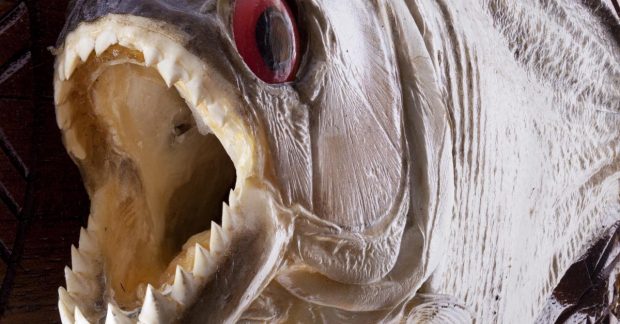
Photo: UNIAN
Key points
- The black piranha's bite is three times stronger than an alligator's.
- Piranhas replace their teeth in blocks to maintain efficiency.
- Schooling is a survival tactic against larger predators like caimans.
- Invasive piranha sightings worldwide are linked to the aquarium trade.
Piranhas have long held a reputation as some of the world's most dangerous predators, largely fueled by horror movies and sensationalist media. However, the reality of these South American fish is far more nuanced. Belonging to the Serrasalmidae family, which includes over 60 species, piranhas are not always the aggressive hunters they are portrayed to be. Their diet is surprisingly diverse, often consisting of insects, crustaceans, and even aquatic plants.
Anatomy and Bite Force
The most striking feature of a piranha is its triangular teeth and powerful jaws. In the red-bellied piranha, also known as Natterer's piranha, the teeth interlock like scissor blades when the mouth closes. Interestingly, they replace their teeth in entire blocks, with new ones growing beneath the old ones before they fall out. The black piranha holds the record for the strongest bite force among bony fish, capable of exerting pressure three times greater than that of an American alligator.
Dietary Habits and Social Behavior
Contrary to popular belief, many piranha species do not specialize in hunting large animals. They are often scavengers, feeding on carrion, small fish, and seeds. Some species, like those found in Brazil's Trombetas River basin, have almost entirely transitioned to a herbivorous lifestyle, consuming only river weeds. Their famous schooling behavior is primarily a defense mechanism against predators such as caimans and river dolphins, rather than a coordinated hunting strategy.
"Mass attacks shown in films are rare and usually triggered by extreme hunger or stress during the dry season when water levels are low," researchers explain.
While native to South America, piranhas have been discovered in the UK, China, and the US in recent decades. These occurrences are typically the result of aquarium owners releasing their pets into local waterways, a practice that can pose a significant threat to native biodiversity and local ecosystems.
Source UNIAN — unian.ua/curiosities/piranji-chim-harchuyutsya-ci-ribi-ta-naskilki-… ↗
Read next
 🩺Health
Fire on Russian Vessel in Finnish Waters Following Drone Attack: Operations Continue
Emergency teams in Finland are continuing firefighting operations aboard the Russian cargo vessel Sparta II following a drone strike.
 🩺Health
Interagency standoff: NABU initiates case against SBU special forces over seized funds
The National Anti-Corruption Bureau has launched a prosecution against SBU Alpha special unit fighters over the seizure of $25,000 during last year's searches.
 🩺Health
Attack on Dymer: Fourteen Residents Uncontactable Following Residential Building Strike
A 5-story residential building was partially destroyed following a drone attack in Dymer, Kyiv region, as search and rescue operations continue.
 🧠AI Analysis
The Philosophy of Repair: How Infrastructure Resilience Relies on Daily, Unseen Labor
An exploration of how Ukraine faces wartime winters through the lens of infrastructure repair, invisible labor, and complex ecological dilemmas.
 🚨Events
Enemy attacks energy infrastructure in Zhytomyr region four times in a day
Russian forces launched four drone strikes on the energy infrastructure of the Zhytomyr region within a day, attempting to cut off residents' electricity and heating.
 🚨Events
Monumental Tombs from the Era of King Herod Discovered in Palestine
Researchers near ancient Jericho have found three funerary complexes dating back about 2,000 years with rare artifacts.